
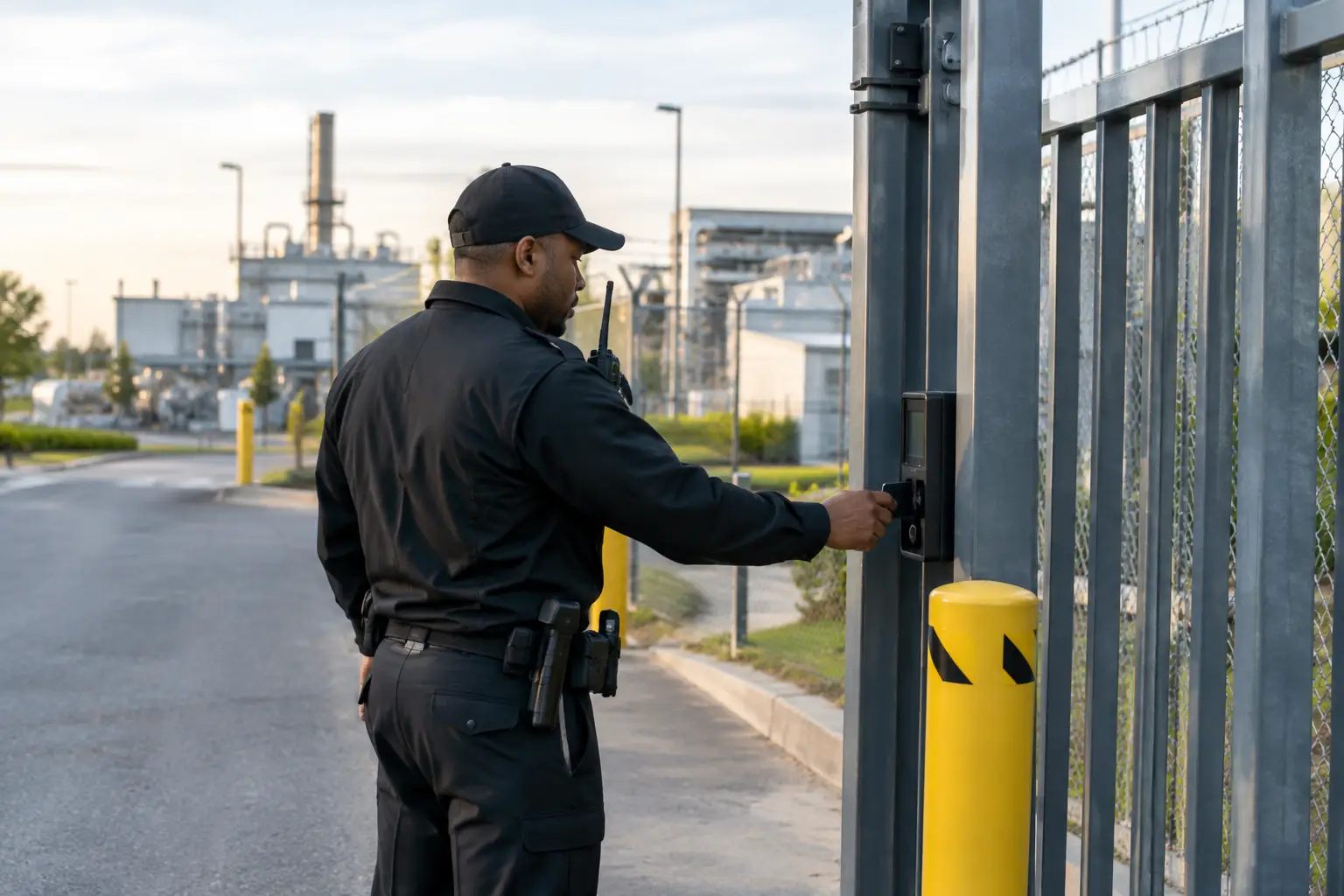
A utility gate is not just a perimeter feature. It is the point where an authorized contractor, a delivery driver, a crew member, a trespasser, or a theft team either gains access or is stopped. The best utility gate controls combine physical barriers, verified access procedures, visible enforcement capability, and documentation that stands up after an incident.
For substations, transmission yards, utility construction sites, and industrial properties, the objective is not simply to keep a gate closed. The objective is to control who enters, why they enter, where they are permitted to go, and what happens when someone refuses to comply. A chain and padlock may delay entry. It does not identify a vehicle, challenge a false claim of authorization, preserve incident footage, or protect a crew working beside live traffic.
What the Best Utility Gate Controls Must Do
A workable gate-control program has to protect assets without creating a bottleneck for legitimate operations. Line crews, emergency contractors, fuel vendors, inspectors, and material deliveries may need access at irregular hours. During storm restoration, the volume of vehicles and the urgency of entry can increase sharply. Controls that work under normal conditions but break down during an outage are not sufficient.
The strongest systems establish four outcomes: they deter unauthorized entry, verify authorized access, create a documented record of activity, and provide a defined escalation path. Each outcome matters because utility sites face different risks at different times. A remote substation may be targeted for copper theft after dark. A construction laydown yard may struggle with equipment loss and unauthorized material pickups. An active work zone may face public intrusion, traffic conflicts, and access confusion.
Physical hardware remains necessary. Fencing, hardened gates, protected hinges, vehicle barriers, lighting, and controlled lock systems establish the first layer. But hardware alone cannot make a judgment call when a person arrives with a convincing story, an unmarked vehicle, or an expired work order. That is where personnel, monitoring, and access procedures have to take over.
Build Controls Around the Site's Actual Access Pattern
Before selecting a gate operator, camera system, or staffing model, map how the site actually functions. Identify every vehicle entrance, pedestrian opening, emergency access point, contractor staging area, and route to critical assets. Then determine which points must remain available around the clock and which can be secured outside scheduled work periods.
A single unattended gate may be appropriate for a low-traffic location with electronic credentials, reliable communication, and clear authorization lists. It is a poor fit for a construction gate receiving changing subcontractors, heavy equipment deliveries, and public-facing traffic. A staffed entry point may cost more than a keypad, but it can prevent delays, verify identification, control staging, and respond immediately to suspicious activity.
Access rules should distinguish between routine entry and exception entry. Routine access may include named employees, approved fleet vehicles, scheduled contractors, and recurring vendors. Exception entry includes after-hours deliveries, emergency repair crews, replacement subcontractors, visitors without credentials, and anyone claiming verbal approval. Exception entry requires a person with authority to verify the claim, contact the responsible site representative, and deny access when authorization cannot be confirmed.
Gate Controls That Work Together
The best results come from layered controls rather than a single device or person. The appropriate combination depends on site criticality, geography, traffic volume, operating hours, theft history, and the consequence of an unauthorized entry.
A controlled vehicle gate creates the outer boundary, but it should be selected for the operating environment. Sliding or swing gates need reliable power, clear travel paths, and emergency override procedures. In remote locations, solar-powered systems may be practical, though they still require maintenance and communication planning. The gate should be protected from tailgating, forced opening, and easy manipulation of exposed controls.
Credentialed access adds accountability when the credential is assigned to a named person or authorized vehicle. Keypads are convenient, but shared codes quickly weaken accountability. Cards, fobs, mobile credentials, and managed lock systems provide better traceability when enrollment and removal are handled promptly. The trade-off is administrative discipline. An access-control platform is only as accurate as the contractor roster and offboarding process behind it.
Camera coverage should document the approach to the gate, the gate line itself, license plates where conditions allow, and the route toward critical equipment. A camera mounted too high or aimed too broadly may show that someone entered without providing usable identification. Lighting, angle, retention periods, and remote monitoring procedures all determine whether footage becomes actionable evidence or merely an incomplete record.
On-site personnel provide the judgment that automated controls cannot. A trained gate officer can compare identification to a current access roster, inspect delivery paperwork, direct vehicles to designated areas, prevent tailgating, and establish an immediate command presence. For high-risk sites, a sworn, licensed, and insured officer adds legal enforcement authority that an unarmed guard or unattended gate cannot provide.
Why Sworn Enforcement Changes the Gate-Control Decision
Some access problems are administrative. A visitor forgot a badge or a delivery arrived early. Others involve trespass, suspected theft, disorderly conduct, refusal to leave, or a person attempting to force access to critical infrastructure. Those incidents should not be handled with vague instructions to "observe and report" when the site needs direct action.
A sworn officer can address criminal activity and trespass within the scope of lawful authority, coordinate with responding agencies, and produce a clear incident record. That capability is particularly relevant at substations, transmission facilities, isolated equipment yards, and active utility projects where response times may be affected by location or weather.
The presence of enforcement-capable personnel also improves routine gate discipline. Contractors are more likely to follow check-in requirements, vehicle restrictions, PPE rules, and designated traffic routes when the person at the gate has the authority to enforce site rules. Real authority is operationally different from a sign, a cone, or a flagger standing beside an open entrance.
Document Every Exception, Not Just Every Incident
Gate logs should do more than record a time and a name. They should establish who authorized entry, the company represented, vehicle information, purpose of visit, destination, and time out when practical. For deliveries or after-hours access, note the work order, receiving contact, and any deviation from the planned access process.
Incident documentation should capture observed behavior, actions taken, notifications made, law-enforcement involvement, and available video or photographic evidence. This is valuable for claims, internal investigations, contractor accountability, and security program reviews. For regulated utility environments, thorough records also support security planning aligned with NERC CIP-014 and related operational expectations.
Documentation should be usable, not ceremonial. A logbook that cannot be read, a camera archive no one reviews, or an incident report completed days later will not help a site manager make decisions during an active threat. Establish who receives reports, when they receive them, and what event thresholds require immediate notification.
Plan for Storms, Outages, and Construction Surges
Gate controls often fail when operations become least predictable. Storm response can bring mutual-assistance crews, rental equipment, fuel trucks, tree contractors, and utility personnel from outside the normal service area. Construction phases can change access routes overnight. A gate-control plan must account for these surges before they happen.
Maintain a rapid process for updating approved vendor and crew lists. Designate a utility representative who can authorize exceptions at any hour. Pre-identify overflow staging areas so vehicles do not stack up on public roads or block emergency access. If access conditions change, communicate the new traffic pattern directly to crews and document the change at the gate.
For Georgia sites requiring planned or urgent coverage, Grid Guard Protective Services can deploy sworn officers statewide, with standard scheduling lead times of 72 hours, 24/7 shift availability, and documented incident footage when augmented camera coverage is used. The correct staffing level should be based on the site's risk, traffic, operating schedule, and the consequences of a breach, not on a one-size-fits-all post order.
A gate control plan earns its value at the moment an unfamiliar vehicle arrives after dark, a contractor cannot verify a work order, or a person refuses to leave. Build the process so the person responsible for the gate has clear authority, current information, and a documented path to act.