
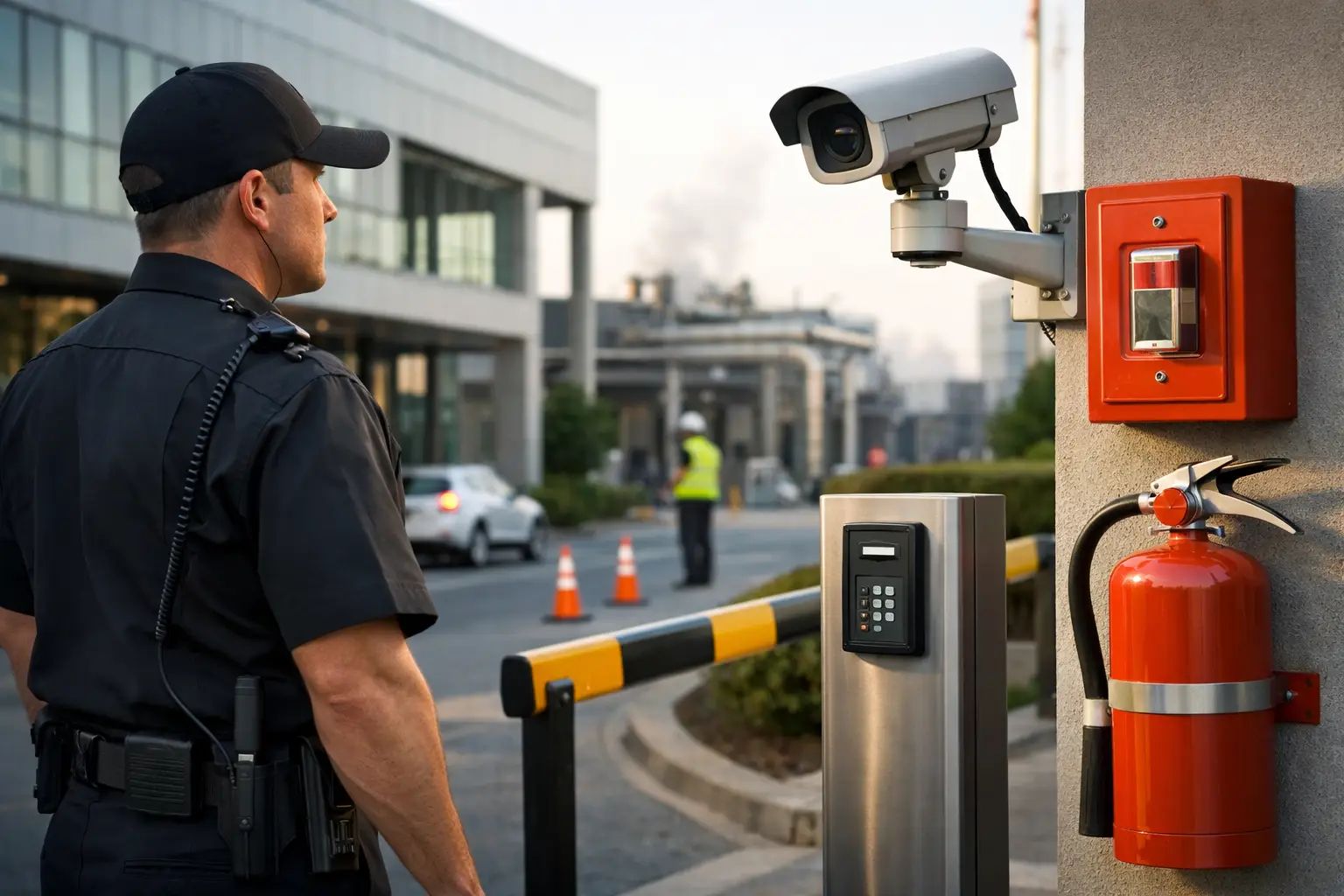
A loading-gate latch cut after midnight, a missing spool of copper, a contractor entering through the wrong access point - these are not minor security issues. They are operational interruptions with costs that extend beyond the value of the stolen material. Effective commercial property loss prevention protects inventory, equipment, people, schedules, and the ability to document exactly what occurred when an incident reaches law enforcement, insurance, or management review.
For large commercial, industrial, utility-adjacent, and construction properties, a camera pointed at a driveway is not a loss-prevention plan. The plan must establish control over who enters, where they move, what happens when they refuse to comply, and how the site responds after hours.
Commercial Property Loss Prevention Starts at the Perimeter
Most property losses begin with an access failure. A gate is left open for deliveries. A badge reader is bypassed because crews are working late. A vehicle follows an authorized contractor through an entrance. On a large site, these gaps can remain invisible until tools, materials, fuel, or equipment are already gone.
The perimeter should be treated as an operating control, not a fence line. Identify every vehicle entrance, pedestrian point, emergency gate, laydown-yard boundary, and area where public traffic can reach the property. Then establish which points are open, when they are open, and who has authority to grant entry.
That authority matters. An unarmed guard may observe and report an unauthorized person. A sworn, licensed, insured law enforcement officer can address trespass and criminal activity directly within the scope of their legal authority. The difference is especially clear at sites with repeat trespass, active theft patterns, disputed access, or contractors who need firm credential checks before entering a controlled area.
Build access rules around site activity
Access control should match the property’s actual work pattern. A distribution center with overnight shipments needs different procedures than a vacant commercial redevelopment site or an industrial facility with rotating contractors. One fixed post may be sufficient for a single controlled gate. A property with several active entrances, material yards, and public-facing operations may require patrol coverage, scheduled checks, or an officer positioned where access decisions are being made.
Every entry procedure should answer three basic questions: Who is expected? What work are they authorized to perform? Where may they go? If staff cannot answer those questions at the gate, the site is relying on assumption rather than control.
Focus Protection Where Loss Creates Downtime
The highest-value asset is not always the item most likely to be stolen. A small component can halt a piece of equipment. A damaged gate can expose an entire yard. Vandalism to electrical service, controls, fuel systems, or communications equipment can delay operations well beyond the repair itself.
A practical assessment looks at both replacement cost and operational consequence. Prioritize areas where an incident could stop production, delay a project, create a safety exposure, or trigger reporting obligations. For many commercial and industrial properties, attention should center on four categories:
- Copper, wire, catalytic converters, fuel, tools, and other materials with resale value.
- Mobile equipment, trailers, generators, and keys that can be removed or misused quickly.
- Electrical rooms, telecom equipment, control panels, and utility connections that can disrupt operations.
- Remote yards, back lots, roof access points, and vacant structures with limited natural observation.
This does not mean every asset needs the same level of protection. It means coverage should be assigned according to risk. A gated equipment yard may need a sworn officer during delivery windows and overnight remote camera monitoring. A high-traffic facility may need continuous access control at the main entrance, with documented patrols of vulnerable areas. The right deployment depends on loss history, site layout, operating hours, and the likely consequences of a breach.
Use Visible Enforcement and Verified Observation Together
Visible officer presence changes behavior. It discourages opportunistic theft, forces access decisions to be made at a controlled point, and gives employees and contractors a clear person to contact when something does not look right. It also provides a direct response option when an individual ignores posted restrictions or attempts to enter without authorization.
Remote cameras add a different capability: persistent observation of areas that cannot be staffed continuously. Solar-camera networks can cover remote gates, laydown yards, fence lines, and equipment areas without relying on permanent power infrastructure. When paired with 24/7 monitoring, dispatch, and documented incident footage, they extend the site’s ability to identify activity and preserve evidence.
Neither measure replaces the other in every situation. Cameras can show what happened, but they may not stop an active trespasser without a response plan. An officer provides command presence and legal enforcement authority, but one officer cannot see every blind spot across a large property. Augmented protection combines an on-site sworn officer with remotely monitored cameras so that field response and observation support each other.
The operational question is not whether a site needs people or technology. It is where each one produces the most control for the hours and locations at risk.
Make Documentation Part of the Security Function
After an incident, vague reports create a second problem. Site leaders may know something happened but lack a reliable timeline, photos, vehicle details, witness information, or evidence of the response. That weakens insurance claims, internal investigations, contractor accountability, and decisions about future coverage.
Documented incident footage and professional reports turn security activity into usable operational information. Reports should identify the date, time, location, parties involved, observed conduct, enforcement action taken, notifications made, and any property damage or evidence preserved. Patrol activity and access denials should also be documented when they reveal recurring weaknesses, such as repeated attempts to use a closed entrance or frequent after-hours movement near a material yard.
For infrastructure-adjacent commercial sites, documentation may also support broader compliance readiness. Security records can help demonstrate controlled access, incident response, and protective measures aligned with site requirements, including NERC CIP-014 and OSHA-related expectations where applicable. Documentation does not create compliance by itself. It gives the organization a defensible record of how protective controls were performed.
Plan for Escalation Before the Incident
Loss prevention fails when the response chain is unclear. An officer needs current contacts for site management, safety leadership, project supervision, and any designated law-enforcement or emergency points of contact. Those contacts need to know what triggers a call, who can authorize access changes, and whether operations should be paused after a serious event.
Establish procedures for common conditions: an unauthorized vehicle at the gate, a person found inside a restricted yard, suspected theft in progress, damaged fencing, a hostile removal from the site, and a weather-related closure that leaves assets exposed. The goal is not a lengthy binder. It is a response sequence that works at 2:00 a.m. when the site manager is not present.
Emergency conditions deserve special attention. Storms, outages, and urgent repairs can bring unfamiliar contractors, rushed access decisions, traffic conflicts, and valuable equipment into temporary work areas. Coverage must be able to scale beyond routine post orders. Grid Guard Protective Services provides statewide Georgia coverage with 24/7 shifts, standard 72-hour scheduling lead times, and rapid-response staffing for urgent conditions. That model gives site operators an enforcement-capable option when normal security arrangements no longer match the risk.
Set Post Orders That Produce Measurable Results
A post order should not simply instruct an officer to “watch the property.” It should define the access points to control, credentials to verify, restricted areas, patrol intervals, vehicle procedures, prohibited conduct, reporting requirements, and escalation contacts. It should also state what the officer is expected to do when an individual refuses direction or criminal activity is observed.
Review the post order after a theft attempt, trespass event, construction-phase change, or access-pattern shift. Sites evolve. A new subcontractor entrance, expanded laydown yard, or change in delivery hours can create exposure faster than a formal annual review will catch it.
Good commercial property loss prevention is visible, documented, and built around real authority. Start by identifying the one access point or asset whose failure would disrupt operations most, then assign a control that can be enforced and measured on every shift.