
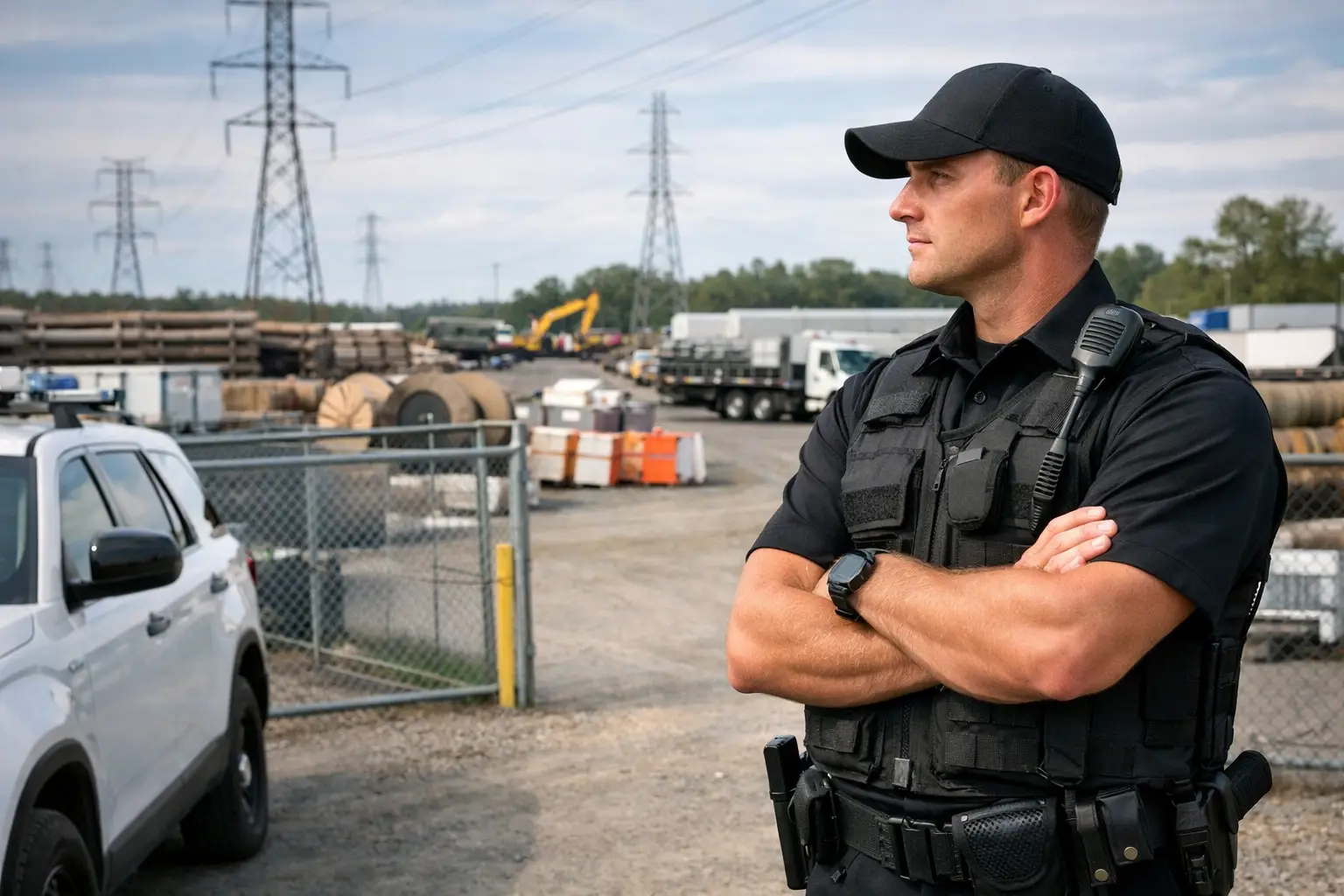
A laydown yard can hold the materials that determine whether a utility project stays on schedule or stops cold. Cable reels, transformers, switchgear, fuel, copper, tools, fleet equipment, and contractor inventory often sit behind temporary fencing with changing crews and multiple delivery windows. Secure utility laydown yards require more than a gate, a light pole, or an unarmed presence. They require visible control, legal enforcement authority, and documentation that gives project leadership a clear record of what occurred.
For utility construction, storm restoration, transmission work, and substation upgrades, the security problem is operational. A theft can delay an energization date. An unauthorized person can create a crew-safety issue. A poorly managed delivery can block equipment access or expose the site to liability. The right protection plan protects assets, people, schedules, and the chain of accountability around all four.
What Makes a Utility Laydown Yard Vulnerable?
Laydown yards are commonly established near active projects, not designed as permanent high-security facilities. Their layout can change weekly as materials arrive, equipment moves, and subcontractors rotate through the work. That flexibility is useful for construction, but it creates gaps that opportunistic thieves, trespassers, and unauthorized vendors can exploit.
Copper and equipment theft receive the most attention, but they are not the only threats. Fuel siphoning, damage to stored materials, illegal dumping, vehicle break-ins, and unauthorized entry after hours can each disrupt work. During storm response, risk increases further. Crews may be operating around the clock, new staging locations may be opened quickly, and materials may be staged in locations that have limited existing security infrastructure.
A camera-only approach can document an event, but it may not stop a person at the gate or address a trespasser who refuses to leave. Temporary fencing establishes a boundary, but it does not verify credentials, manage deliveries, or create a documented response. These measures have value, but they work best as part of an enforcement-capable security plan.
Secure Utility Laydown Yards Start at the Gate
Access control is the first operational control. The objective is not to slow legitimate work. It is to ensure that every person, vehicle, and delivery entering the yard has a valid reason to be there and can be accounted for afterward.
A sworn, licensed, and insured law enforcement officer provides command presence at the point where most access decisions are made. The officer can verify identification, confirm delivery instructions, direct drivers to designated areas, and enforce site rules when an individual attempts to bypass them. Unlike passive guard coverage, an off-duty sworn officer carries legal enforcement authority to address trespass and criminal conduct directly when circumstances require it.
The access plan should match the project. A large transmission build may need controlled entry during every delivery window, vehicle logs, trailer checks, and designated traffic routes. A smaller overnight staging yard may need an officer during higher-risk hours, supported by monitored cameras and periodic site checks. The answer depends on material value, local theft activity, yard location, operating hours, public exposure, and the consequences of a missed delivery or damaged component.
Control Deliveries Without Disrupting Production
Delivery traffic needs a process that crews and vendors can follow under pressure. Drivers should know where to enter, where to wait, who can authorize a change, and where they may unload. When these details are left to improvised decisions at the gate, the yard can become congested and security controls can erode quickly.
An officer assigned to access control can verify scheduled deliveries against the project contact, turn away unscheduled vehicles, maintain a vehicle log, and keep unauthorized traffic from entering pedestrian or equipment zones. This is especially important where a laydown yard connects to a public roadway or active work zone. An officer provides real authority a cone or flagger cannot provide when traffic direction, site access, and public safety intersect.
Build Layers Around the Officer Post
A sworn officer is most effective when the site layout supports the assignment. Before coverage begins, the security plan should identify the primary entrance, secondary access points, blind spots, high-value storage zones, emergency contacts, and the expected movement of people and equipment.
The core layers usually include controlled entry, perimeter awareness, lighting, material placement, and clear reporting procedures. High-value cable, copper-bearing materials, portable tools, and fuel assets should not be stored in the easiest area to reach from a fence line. Gates should remain secured when not actively attended. Site managers should provide the officer with current authorized-contact lists, delivery schedules, and escalation instructions.
For remote or large-footprint yards, augmented protection can extend the officer's reach. Grid Guard Protective Services can combine an on-site sworn officer with remotely monitored solar-camera networks, 24/7 surveillance, dispatch support, and documented incident footage. This model is particularly useful for overnight material protection, temporary yards without fixed power, and projects where a single post must cover a broad perimeter.
Cameras are not a replacement for site command. They provide early detection, visibility into remote areas, and evidence preservation. The officer provides the on-site judgment and enforcement-capable response that turns information into action.
Document Incidents for Operations and Compliance
Security documentation should help operations make decisions, not create paperwork for its own sake. A useful daily activity report records officer arrival and departure, gate activity, deliveries, denied access, patrol observations, safety concerns, incidents, and notifications made to project contacts or law enforcement.
When an event occurs, reporting should establish a reliable timeline. That includes the time of discovery, involved vehicles or individuals, actions taken, notifications, photographs or documented incident footage when available, and the final disposition. This record supports internal review, insurance matters, contractor accountability, and any investigation that follows.
For utility operators managing physical-security expectations, documented coverage can also support a more defensible security posture. Security staffing does not by itself satisfy NERC CIP-014 or OSHA obligations. Those requirements depend on the facility, asset classification, work scope, and the operator's established program. However, officer logs, access records, incident reports, and documented response procedures can support the evidence trail that security, safety, and compliance teams need.
Plan Coverage Around the Actual Risk Window
Many yards do not need the same coverage pattern every day. A project may need daytime gate control while deliveries are active, overnight protection when cable and equipment are stored, or full 24/7 coverage during a critical construction phase. Storm restoration may require immediate expansion as materials and crews mobilize into a staging location.
The key is to staff the risk window rather than rely on a generic post order. Consider when the yard is unattended, when materials are most exposed, whether the surrounding area has active theft concerns, and whether a delayed response would affect outage restoration or scheduled work. A coverage plan should also account for weekends, holidays, shift changes, and the period after crews leave but before deliveries resume.
For planned assignments, officer schedules should be set early enough to confirm site instructions, contacts, and shift requirements. Grid Guard provides statewide Georgia coverage, 24/7 shift availability, standard 72-hour lead times, and quotes within 48 hours for qualified requests. Emergency conditions may require a different mobilization model, so project teams should identify escalation contacts before the event that creates the need.
Questions to Settle Before Coverage Begins
The strongest assignments begin with clear direction from the project owner or contractor. Security leadership should know who has authority to approve entry, who receives after-hours calls, which materials require special attention, and when law enforcement notification is expected. The officer also needs a defined post location, access to current site rules, and a safe means to communicate with project leadership.
Clarify whether the officer is expected to conduct perimeter patrols, remain continuously at the gate, escort deliveries, support traffic control, or respond to camera alerts. These responsibilities can coexist, but they must be prioritized realistically. A single officer cannot simultaneously remain at a gate, patrol a distant fence line, and manage an active delivery queue without a plan for coverage and relief.
Secure utility laydown yards are built through disciplined control, not assumptions. Put sworn authority where access decisions are made, use monitored technology to widen visibility, and require documentation that still answers questions after the shift ends. That approach gives crews room to work while keeping the yard accountable, controlled, and ready for the next operational demand.