
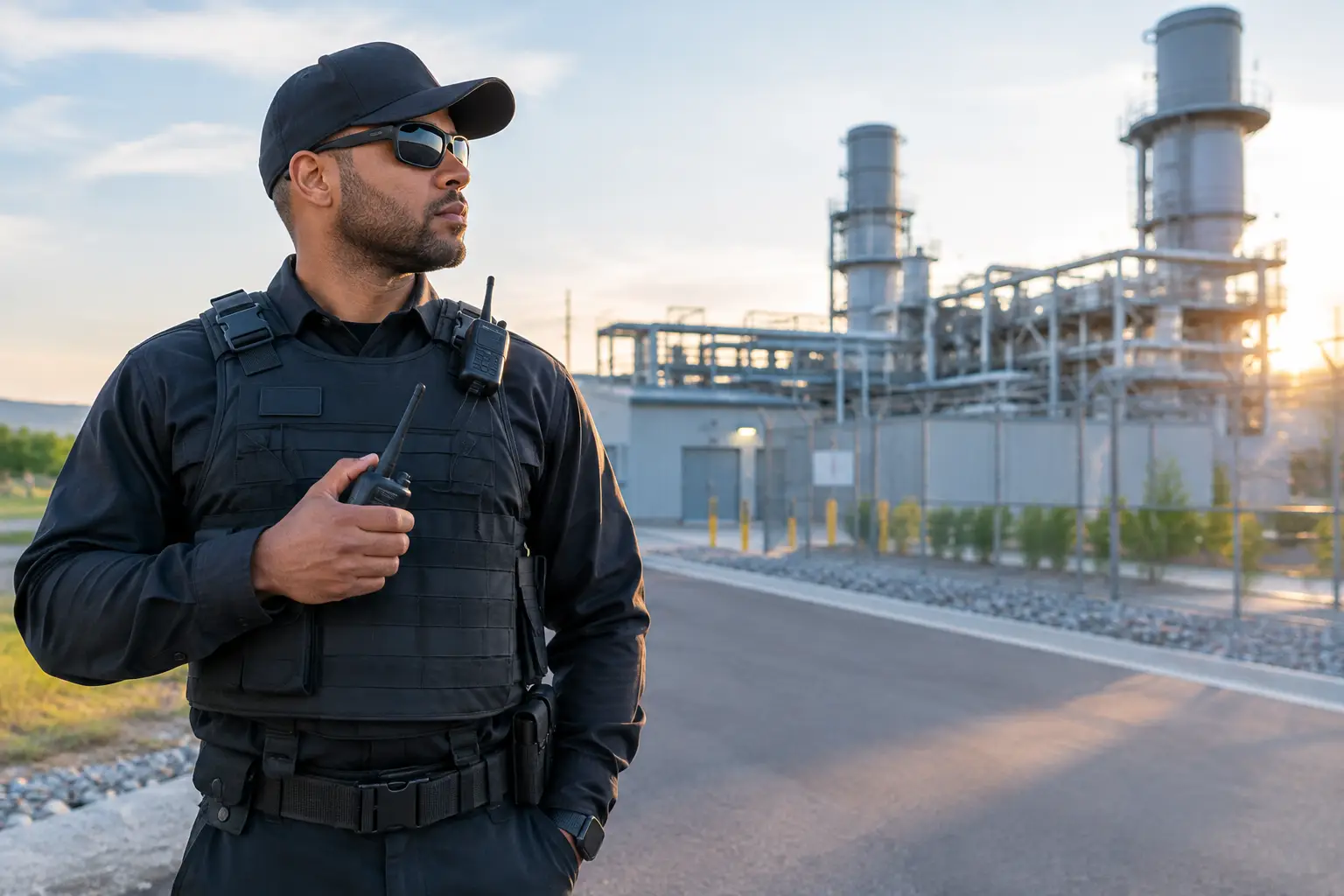
A breached gate at a substation, an unauthorized vehicle near an active work zone, or copper theft at an industrial yard can become an operational failure within minutes. Site security is not a background function at critical facilities. It protects crews, equipment, project schedules, public safety, and the organization’s ability to document that it acted decisively.
For utilities, municipalities, industrial operators, and major contractors, the question is not whether a site needs a visible presence. The question is whether that presence can identify a threat, establish lawful control, and produce usable documentation when conditions change. A passive guard or temporary barrier may be part of the plan, but neither carries the legal enforcement authority of a sworn officer.
Site Security Must Match the Operational Risk
Every location has different exposure, but the consequences tend to be familiar. Transmission yards and substations face theft, tampering, trespass, vandalism, and attempts to gain unauthorized access. Utility construction sites must manage public traffic, protect crews working near roads, and prevent entry into hazardous areas. Industrial and large commercial sites need consistent access control, patrol visibility, loss prevention, and a clear response path after an incident.
The right coverage model depends on what is being protected, when the risk occurs, and how quickly the site can absorb a disruption. A remote rural substation may need overnight officer presence supported by monitored cameras. A utility contractor staging equipment along a public roadway may need a sworn officer at the work zone during active shifts. A large facility with established access points may need officers focused on visitor screening, gate enforcement, patrols, and incident response.
This is why generic security packages often fall short. They may provide a body at the gate, but not the authority, reporting discipline, or field judgment required when a person refuses to leave, a vehicle bypasses instructions, or criminal activity is underway.
Sworn Officers Change the Security Posture
A sworn, licensed, insured law enforcement officer brings a different level of command presence to a site. The officer can address trespass, suspicious activity, traffic violations, and criminal conduct directly within the scope of their legal authority. That matters at locations where delays, uncertain escalation, or limited authority can expose people and assets to greater risk.
The difference is especially clear in work zones. Cones, signs, and flaggers direct traffic, but they cannot enforce traffic laws or stop a dangerous driver from ignoring a closure. A sworn officer provides real authority a cone or flagger cannot provide, while helping crews work with greater confidence near live traffic.
At critical infrastructure sites, sworn-officer coverage also improves the response to unauthorized entry. An officer can assess the situation, establish control, request appropriate backup, and document the event in a format that supports management review, law enforcement follow-up, insurance needs, and compliance records. The goal is not simply to observe an incident. The goal is to manage it.
There are trade-offs. Not every low-risk location needs a full-time officer on every shift, and officer coverage should be assigned where it delivers the strongest operational value. For some sites, scheduled patrols, controlled access during key hours, or a combined officer-and-camera model may provide sufficient protection. Higher-risk locations, active construction areas, and sites with recurring theft or trespass issues often justify dedicated coverage.
Build Coverage Around the Site, Not a Standard Post Order
Effective site protection begins with the operating environment. Before assigning coverage, decision-makers should identify access points, asset locations, public exposure, shift changes, contractor activity, known theft patterns, lighting conditions, response routes, and communications procedures. These details determine where an officer should be positioned and what the officer needs to control.
Access Control and Perimeter Discipline
A gate is only effective when entry rules are consistently applied. Officers can verify credentials, maintain visitor and vehicle logs, challenge unauthorized persons, inspect conditions at entry points, and coordinate access with site supervisors. At larger facilities, patrol patterns should also cover fence lines, equipment storage areas, fuel locations, laydown yards, and blind spots that are not visible from the gate.
For utility and industrial sites, access control should account for contractors, vendors, delivery drivers, and emergency personnel. The objective is not to slow legitimate work. It is to establish a dependable process for confirming who is entering, why they are there, and where they are authorized to go.
Active Work Zones and Traffic Enforcement
Traffic exposure creates a separate security and safety problem. Public drivers may enter closed lanes, ignore signs, approach crews too closely, or attempt to move through an active construction area. Equipment moves, lane closures, and changing work limits can create confusion even when a traffic plan is in place.
Sworn officers can support work-zone traffic enforcement, maintain orderly vehicle movement, and respond when motorists refuse instructions. Coverage can be scheduled around the highest-risk periods, including peak traffic hours, night work, utility restoration, and lane transitions. For contractors, this helps reduce the chance that a traffic incident becomes a crew injury, project delay, or reportable event.
Storm Response and Unplanned Events
Storms, outages, and emergency repairs do not provide a 72-hour planning window. They can create open equipment areas, temporary staging sites, traffic conflicts, and public pressure for immediate restoration. Security coverage in these conditions must be capable of operating around the clock and adapting as repair priorities move.
A clear deployment plan identifies the site contact, officer reporting location, shift duration, communications channel, access requirements, and escalation procedure before the field conditions become more difficult. Statewide availability matters when an outage affects multiple counties or when an incident requires coverage outside a normal operating area.
Documentation Is Part of the Security Function
Visible presence deters some threats. Documentation protects the organization after the fact.
A professional site security program should create clear records of patrol activity, access issues, suspicious behavior, traffic incidents, trespass events, property damage, law enforcement actions, and notifications made to site leadership. Reports should identify times, locations, involved parties, actions taken, and any evidence or footage available. This record supports operational accountability and gives management a factual basis for adjusting coverage.
For critical infrastructure operators, documentation can also support security planning tied to NERC CIP-014 considerations and other site-specific protection requirements. It does not replace an operator’s compliance obligations or risk assessment process. It does provide a defensible operational record showing that the site maintained controlled access, responded to identified risks, and tracked security events.
When camera networks are part of the plan, documented incident footage adds another layer of accountability. Remotely monitored solar-camera systems can extend visibility across large perimeters, remote lots, equipment yards, and temporary projects. They work best when paired with a defined response protocol. Cameras can identify activity, but an on-site sworn officer can investigate, control access, and take enforcement action when necessary.
Choose a Provider for Readiness, Not Just Staffing
Security procurement should test more than hourly rates. Decision-makers need to know whether the provider can staff the right personnel, meet insurance requirements, provide 24/7 shifts, document incidents consistently, and mobilize across the geography where work occurs.
For planned assignments, confirm lead times and give the provider a clear scope of work. Grid Guard Protective Services typically supports scheduled coverage with a 72-hour lead time and provides quotes within 48 hours, while also maintaining rapid-response capability for storm, outage, and emergency conditions across Georgia. Early coordination allows officers to receive post instructions, site maps, access procedures, and contact information before arriving on shift.
Ask practical questions during evaluation: Is the officer sworn, licensed, and insured? What authority can the officer exercise at the site? How are patrols and incidents documented? Can the provider support overnight, weekend, or multi-county coverage? What happens if the assignment expands during an outage or weather event? These answers reveal whether the provider is prepared for operational reality or simply filling a post.
The strongest site security plan is one crews recognize and site leaders can rely on when conditions turn difficult. Put capable sworn officers where risk is real, define what they are expected to control, and require documentation that stands up after the shift ends.