
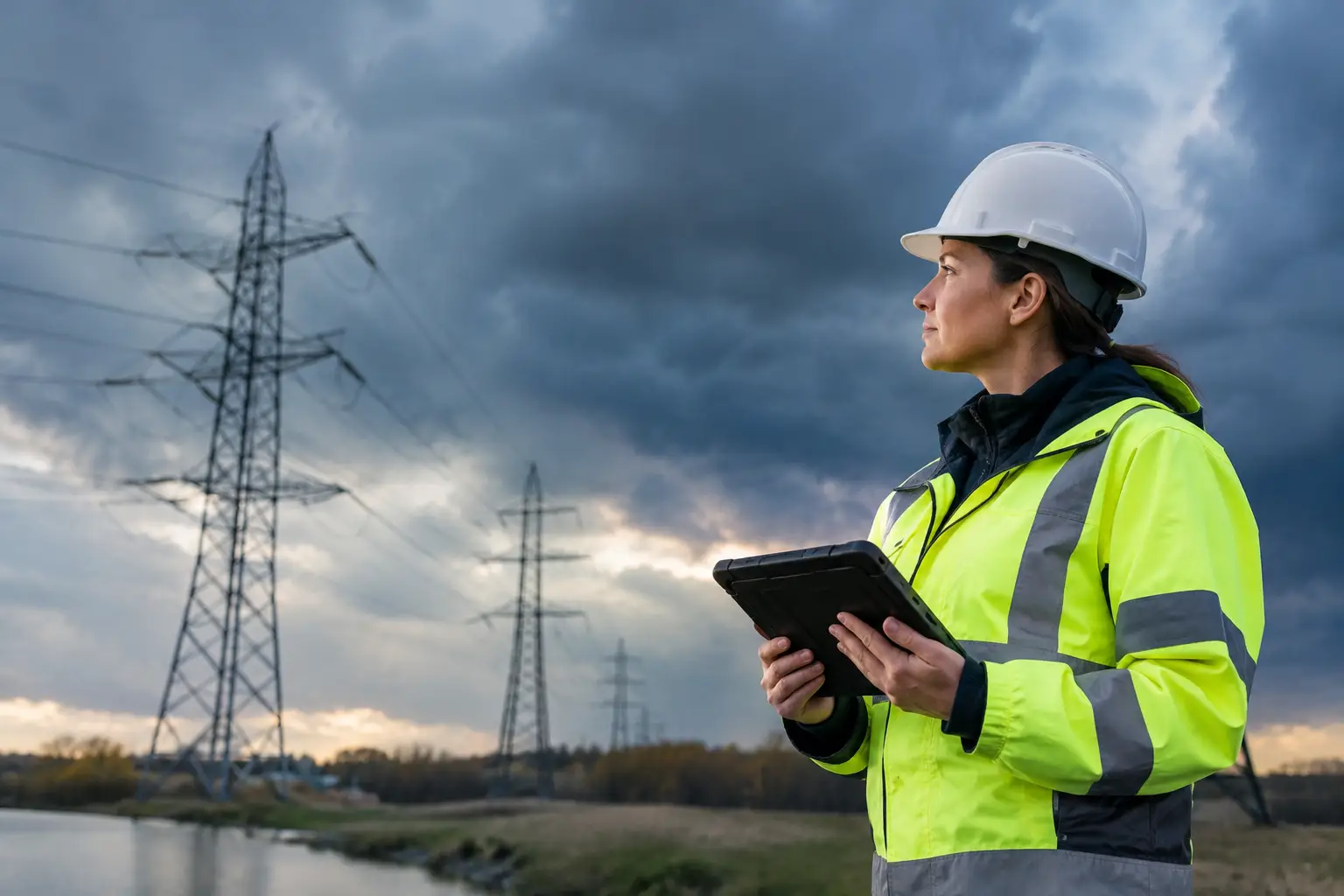
A storm can turn a controlled utility worksite into an exposed, moving operation within hours. Gates may be open for crews, material yards may be unattended, and damaged infrastructure can draw trespassers, thieves, and unsafe public traffic. Storm security technology gives incident commanders visibility and control, but it performs best when paired with personnel who can act on what the technology detects.
Storm Security Technology Is an Operational Tool
For utilities, transmission operators, public works teams, and contractors, storm security technology is not simply a camera package. It is a field security system built to support outage restoration, crew safety, asset protection, and documented decision-making under difficult conditions.
The technology may include solar-powered camera units, monitored video feeds, intrusion alerts, access-control records, lighting, two-way audio, and dispatch coordination. Each component can reduce blind spots at substations, laydown yards, fuel locations, mobile command areas, and remote work zones. But detection alone does not stop an unauthorized person from entering a site, removing copper, interfering with crews, or creating a traffic hazard.
That distinction matters during storm response. A camera can identify activity. A remotely monitored team can verify it and escalate it. A sworn, licensed, insured officer on site has legal enforcement authority to address trespass, criminal activity, and unsafe conduct directly. The right plan connects all three functions: detect, verify, and respond.
Start With the Sites That Cannot Go Dark
Security resources are finite during a regional outage. The first step is not selecting equipment. It is identifying which locations create the greatest operational and public-safety consequence if access is lost, equipment is damaged, or crews are delayed.
A substation with an open repair perimeter may require continuous officer coverage and monitored cameras. A temporary material yard may need controlled entry, lighting, and overnight surveillance. A utility construction work zone near a damaged roadway may need sworn traffic enforcement because cones and flaggers cannot compel compliance from an aggressive or impaired driver.
Priorities should account for asset value, current outage impact, public access, existing damage, crew schedule, theft history, and the time needed to replace critical equipment. A site that is normally low risk can become high risk when a storm forces it into an extended, visible repair operation.
Secure the restoration workflow, not just the fence line
Storm work creates temporary access patterns. Contractors, mutual-aid crews, fuel vendors, equipment operators, and utility personnel may all need entry. If access control is too loose, unauthorized individuals blend into the activity. If it is too restrictive, restoration slows down.
Use a clear entry process that identifies who is authorized, where they may operate, and who can approve exceptions. An officer at the access point can enforce that process, document refusals or removals, and keep gate activity from becoming a distraction for site supervisors. Camera coverage provides a record of vehicle movement and supports review after an incident.
Choose Technology That Can Survive Field Conditions
Storm response is a poor environment for technology that depends on ideal conditions. Power may be unavailable. Cellular service may be degraded. Heavy rain, debris, darkness, and changing work boundaries can reduce camera performance. A useful deployment plan accounts for those limitations before equipment is needed.
Solar camera networks are valuable where grid power is disrupted or unavailable, especially at remote yards and temporary sites. They can be deployed quickly and provide monitored coverage without permanent infrastructure. Their limitations are equally practical: tree cover, poor placement, long periods of low sunlight, obstructed views, and network reliability can affect performance. Equipment must be positioned around the actual threat path, not merely where it is convenient to park a trailer.
Remote monitoring should include a defined escalation path. Who receives an alert? Who verifies the event? Is a site supervisor called first? Is a sworn officer already assigned nearby? When does the situation require law enforcement response or emergency services? Without those decisions made in advance, an alert can become another unanswered notification during a busy restoration shift.
Documented footage has a compliance and claims value
Recorded video is not only useful for live intervention. It can preserve the facts after a copper theft, vehicle strike, vandalism event, safety complaint, or access dispute. Documented incident footage helps security, operations, safety, risk, and legal teams work from the same record.
For critical infrastructure, reporting should capture the time, location, persons involved, actions taken, notifications made, and outcome. Officers should produce clear incident documentation that can support internal review and align with NERC CIP-014 and OSHA-related infrastructure expectations where applicable. Technology provides evidence; disciplined reporting makes that evidence usable.
Put Sworn Officers Where Technology Has a Response Gap
Remote cameras are effective force multipliers, not replacements for an on-site security decision. A live feed cannot direct an unauthorized vehicle away from an active work zone. It cannot escort a trespasser from a restricted area. It cannot establish control when a confrontation develops at a gate.
Sworn officers bring visible command presence and legal enforcement authority to locations where passive measures are insufficient. During storm operations, that can include damaged substations, transmission yards, staging areas, fuel sites, contractor laydown yards, road closures, and high-traffic repair zones. Their role is not limited to reacting to crime. They protect crews from preventable interruptions and give supervisors a defined point of contact for security decisions.
The strongest model is augmented protection: an on-site sworn officer supported by remotely monitored solar-camera networks, 24/7 surveillance, dispatch, and documented incident footage. The officer can focus on access control, patrol, crew coordination, and immediate intervention while the camera network extends visibility beyond a single post.
Coverage needs vary. A secure, fenced rural site may need overnight monitoring and periodic officer checks. An urban substation with public exposure, open gates, and active repairs may justify continuous officer presence. A changing work zone may require traffic enforcement during daytime construction and camera coverage after crews leave. The risk assessment should drive the deployment, not a one-size-fits-all package.
Build Security Into the Storm Plan Before Landfall
The most expensive time to arrange security is after the first theft, gate breach, or work-zone incident. Pre-storm planning allows utilities and contractors to establish priorities, maps, contact lists, access rules, post orders, and escalation procedures while communications are stable.
A workable plan identifies primary and secondary sites, expected shift windows, staging locations, officer check-in requirements, camera placement options, and the operations contacts who can make decisions after hours. It should also define what happens when the storm changes the plan. If a road closes, a substation floods, or a restoration crew is redirected, the security provider needs authority and instructions to reposition quickly.
For planned coverage, Grid Guard Protective Services can schedule sworn officer assignments across Georgia with standard 72-hour lead times, 24/7 shift availability, and quotes within 48 hours. Emergency conditions may require faster coordination, so advance vendor setup, insurance review, and site information are practical safeguards rather than administrative tasks.
Measure Whether the Deployment Is Working
Storm security should be reviewed as an operational function. Useful measures include unauthorized-entry attempts, response times, gate logs, incidents resolved without crew disruption, theft or vandalism losses prevented, traffic conflicts managed, and camera-alert outcomes. Not every event will be dramatic. A well-run deployment often looks quiet because problems were identified early and handled before they affected restoration.
After the event, compare the incidents recorded against site conditions and staffing decisions. Did camera placement cover the actual entry routes? Did officers receive timely notifications? Were supervisors clear on escalation authority? Did access control delay legitimate crews? These answers improve the next mobilization and create a defensible record of how risk was managed.
A storm will always create uncertainty. Your security plan should not add to it. Establish the response chain now, position technology where it extends real visibility, and place sworn authority where crews and critical assets need immediate protection.