
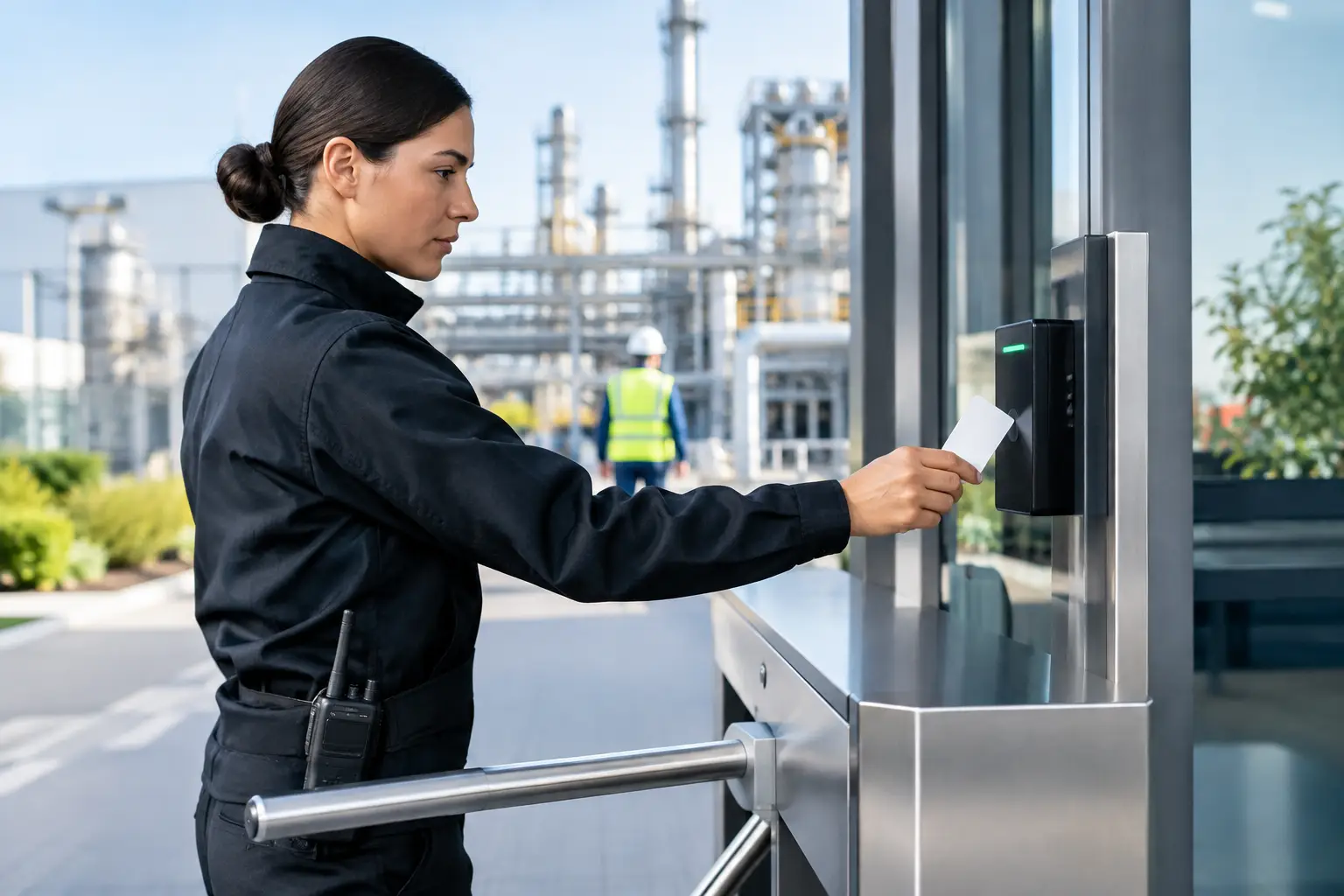
A gate that closes is not necessarily an access control program. At a substation, transmission yard, industrial facility, or active utility work site, the real question is whether every person, vehicle, credential, and exception can be accounted for. The top access control audit steps focus on that operational proof: who was allowed in, who was denied, what happened when rules were challenged, and whether the site can produce records that stand up to internal review, an incident investigation, or regulatory scrutiny.
For critical infrastructure operators, an access control audit should not be treated as a paperwork exercise. Weak access points create openings for copper theft, vandalism, trespass, unsafe work-zone entry, and outages that put crews, schedules, and the public at risk. A disciplined audit identifies the gap before it becomes an event.
Set the audit boundary before walking the site
Start by defining what the audit covers. A single facility may have a main vehicle gate, pedestrian entry, contractor parking, laydown yards, control buildings, remote equipment enclosures, temporary construction entrances, and emergency access routes. Auditing only the front gate gives a false picture of site security.
Document the physical boundary and identify each point where a person or vehicle can enter, exit, climb, cut through, or bypass a controlled area. Include temporary conditions. Storm restoration, construction mobilization, equipment deliveries, and special events often create access routes that do not exist during normal operations.
The audit scope should also identify the operational stakes at each entry point. A visitor door to an administrative office does not carry the same risk as a gate leading to energized equipment or a laydown yard holding high-value cable and copper. Assigning risk by location helps operations teams direct officer coverage, surveillance, and capital improvements where they matter most.
Top access control audit steps begin with authorization
The first test is simple: determine whether the current access list matches the people who genuinely need access. Compare gate lists, badge records, key logs, lockbox access, contractor rosters, and vehicle authorizations against current staffing and project records.
Look closely at separated employees, completed subcontractors, transferred personnel, expired vendor agreements, and temporary workers. These are common sources of dormant credentials. A badge that still opens a door after a worker leaves may not be visible in daily operations, but it is a measurable control failure.
Authorization should be role-based, not based on convenience. A contractor may need access to a designated work zone during a defined shift but should not automatically have unrestricted entry to a control building, warehouse, or equipment yard. The audit should verify who approves access, how long approval lasts, and who has authority to revoke it.
When projects move quickly, make sure emergency access does not become permanent access by default. Temporary credentials should carry an expiration date, a responsible sponsor, and a documented return or deactivation process.
Inspect the physical perimeter and every bypass route
Access control depends on the condition of the perimeter. Walk the fence line, gate hardware, pedestrian doors, bollards, lighting, signage, and camera coverage in the same conditions an intruder would encounter. A daylight inspection alone may miss poor lighting, camera glare, blind spots, or gates that are routinely left open after hours.
Check for gaps under fencing, damaged mesh, unsecured utility penetrations, overgrown vegetation, accessible ladders, stacked materials near the fence, and adjacent properties that create easy approach routes. At construction sites, fencing and access patterns can change weekly. What was secure at mobilization may no longer reflect the active site layout.
Also observe how gates operate under real traffic conditions. A gate may function correctly during a quiet inspection but fail when multiple contractor vehicles arrive, a delivery truck needs clearance, or crews are demobilizing at shift change. Tailgating, gate propping, and drivers following an authorized vehicle through an open gate are access-control failures even if the gate hardware itself works.
Test credential, key, and visitor controls
Electronic credentials, physical keys, keypad codes, and visitor passes should create a traceable chain of custody. The audit should confirm whether credentials are unique to the individual, whether shared codes are in use, and whether access logs can be retrieved promptly after an incident.
Shared keys and shared gate codes reduce accountability. They may be practical at a low-risk temporary location, but they should be recognized as a trade-off, documented, and supported by compensating controls such as sworn officer screening, camera coverage, and a tightly managed sign-out process.
Visitor procedures deserve the same attention as employee access. Verify whether visitors are required to present identification, sign in, state their destination, receive a visible pass, and remain escorted where required. At sensitive utility and industrial sites, the person operating the gate must have a clear escalation path when a visitor arrives without a sponsor or refuses site rules.
A quality audit also tests the offboarding process. Select a sample of former employees and completed contractors, then verify that badges, keys, remote controls, and system permissions were removed on time. This is one of the fastest ways to determine whether written policy is being executed in the field.
Evaluate the people enforcing the access point
The strongest gate equipment can be defeated by unclear instructions or passive staffing. Assess whether personnel assigned to entry control understand site rules, credential standards, prohibited items, vehicle procedures, emergency contacts, and the limits of their authority.
For high-risk sites, a sworn, licensed, and insured officer changes the response model. An officer can address trespass and criminal activity directly, rather than merely observe and call for assistance. That legal enforcement authority is especially relevant where repeated unauthorized entry, theft exposure, crew safety issues, or confrontational encounters are part of the operating environment.
Evaluate post orders against actual conditions. If the assignment calls for vehicle screening, confirm that the post has safe space to conduct it. If the officer is expected to verify contractor credentials, ensure current rosters and sponsor contacts are available. If entry must be denied, make sure the officer has a defined procedure for holding the perimeter, notifying site leadership, and documenting the event.
Review logs as evidence, not as routine paperwork
Access logs, visitor records, officer daily activity reports, camera clips, alarm reports, and incident narratives should tell the same story. Select several dates and compare records. Do gate logs show the same contractor activity reflected in work schedules? Do camera timestamps align with reported deliveries? Was a denied-entry incident documented with the reason, individual, vehicle information, notifications made, and final disposition?
Missing or vague documentation weakens both security management and compliance readiness. For facilities operating under NERC CIP-014-related physical security expectations, documentation should show that risks were identified, controls were applied, and exceptions were handled through an accountable process. OSHA-related site requirements also depend on being able to demonstrate how access was managed around active hazards, traffic, and restricted work areas.
Documented incident footage adds another layer of verification. It can clarify whether a vehicle forced a gate, whether a visitor bypassed screening, or whether a confrontation escalated. Footage is only useful, however, if camera coverage, retention periods, timestamps, and retrieval responsibilities have been tested.
Run controlled exception scenarios
An audit should include practical tests, coordinated with site leadership so they do not disrupt operations or create safety issues. Test what happens when a contractor arrives without an updated credential, a delivery appears after normal hours, a gate reader fails, or a worker reports a lost badge.
The goal is not to catch personnel off guard. It is to determine whether the site has a controlled response that protects operations without allowing convenience to override security. A mature program can distinguish between a legitimate urgent need and an unauthorized exception, then document the decision either way.
Emergency conditions require particular attention. During storm response or outage restoration, utilities may need rapid entry for mutual-aid crews, contractors, and equipment deliveries. The audit should confirm that emergency access has pre-approved contacts, temporary credential procedures, traffic control plans, and a method for reconciling everyone on site once conditions stabilize.
Assign corrective actions with owners and deadlines
Every finding needs a practical disposition. Classify gaps by risk, assign an owner, set a due date, and identify the evidence required to close the item. “Improve gate security” is not an actionable correction. “Replace damaged north-yard gate latch, verify closing force, and submit test record by Friday” is.
Some corrections are physical, such as repairing fence lines or improving lighting. Others are procedural, including revising visitor rules, removing inactive credentials, or retraining gate personnel. Where repeated issues are driven by limited staffing or active criminal activity, added sworn-officer coverage and remotely monitored camera networks may be the more appropriate control than another memo.
Grid Guard Protective Services can support Georgia sites that need documented officer coverage, enforcement-capable access control, and incident reporting aligned to the realities of critical infrastructure operations. For planned projects, coverage can be scheduled with standard lead times; for urgent conditions, the access plan should already identify who can authorize rapid deployment and how the officer post will integrate with site command.
An access control audit has value when it changes what happens at the gate on the next shift. Keep the findings tied to named assets, real operating conditions, and accountable corrective actions. That is how a perimeter becomes a defensible control rather than a line on a site map.