
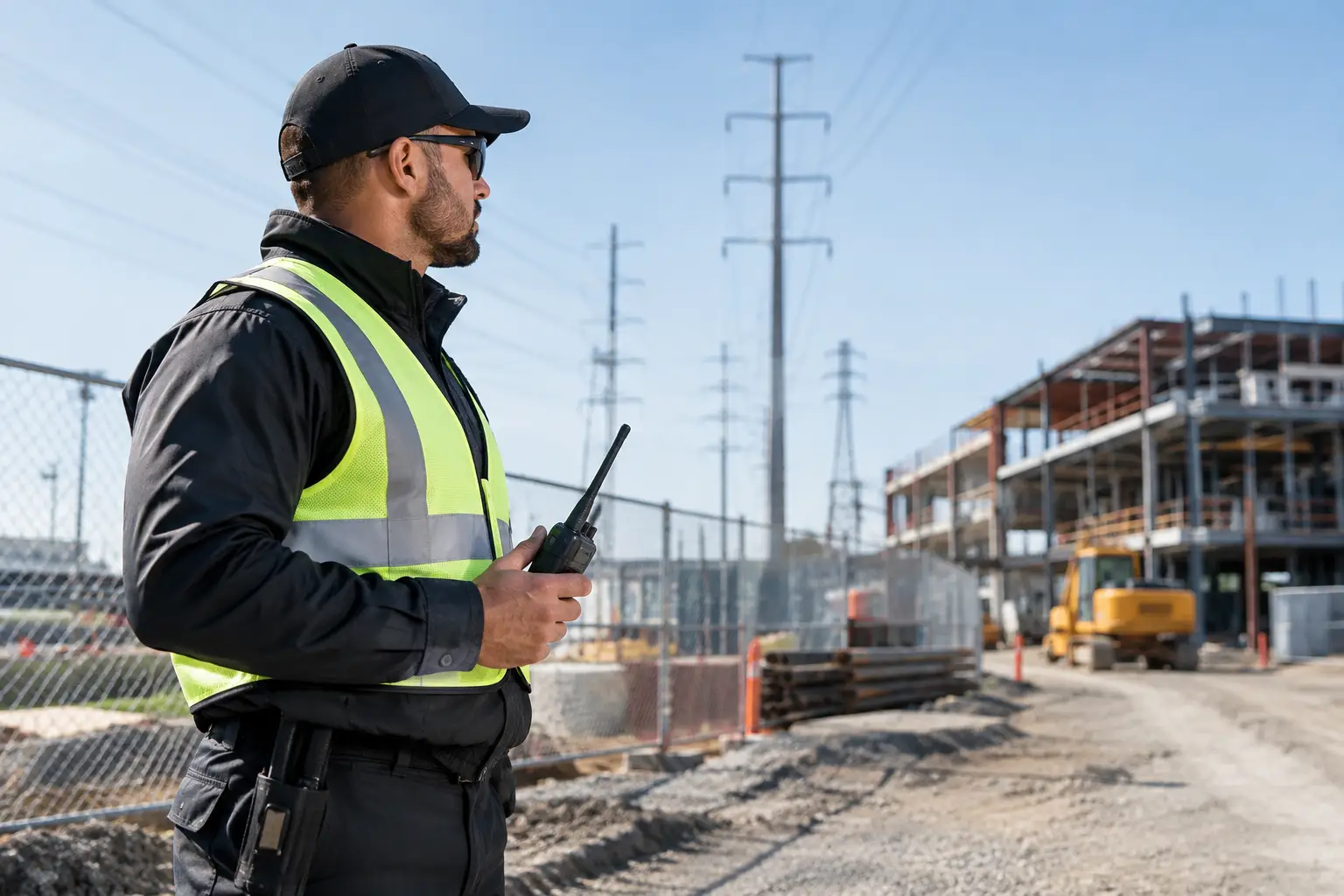
A substation gate left unsecured, an unverified contractor entering a transmission yard, or a work zone without lawful traffic control can become more than a security problem. It can create a utility compliance failure with operational, safety, documentation, and public-risk consequences. For utilities and contractors operating critical infrastructure, physical security has to do more than create a visible presence. It must control access, support field safety, preserve evidence, and produce records that stand up to internal review, customer scrutiny, and regulatory expectations.
Utility Compliance Is an Operating Function
Utility compliance is often discussed as a policy, audit, or checklist issue. At the site level, it is an execution issue. Written procedures only matter when personnel at the gate, perimeter, work zone, or staging area can carry them out consistently under normal and emergency conditions.
That includes knowing who is authorized to enter, why they are there, where they can go, and what action is required when someone refuses direction. It also means documenting incidents while details are current, preserving a clear chain of events, and escalating concerns through the right operational channels.
For electric utilities, physical-security planning may intersect with NERC CIP-014 responsibilities involving transmission-station security assessments and protections. For construction and outage work, OSHA-related safety expectations, traffic-control plans, contractor coordination, and public exposure add another layer. The applicable requirements vary by asset, ownership model, project scope, and jurisdiction. The common requirement is control: the site operator must be able to show that known risks were identified and addressed with credible measures.
Passive measures alone rarely provide that control. A fence can be cut. A camera can record an event without stopping it. A sign can state a rule without enforcing it. Those tools remain valuable, but they work best when backed by trained personnel with a defined response role.
Where Compliance Breaks Down in the Field
Most failures do not begin with a dramatic incident. They begin with ordinary gaps: a temporary gate is left open during material deliveries, visitor credentials are not checked after a shift change, or a crew assumes someone else is monitoring the laydown yard. During storm restoration, those gaps widen quickly as staffing changes, equipment moves, and fatigue increases.
Unauthorized access is one of the clearest examples. A person entering a restricted yard may be a trespasser, a thief scouting copper or equipment, a disgruntled former worker, or simply a member of the public who does not understand the danger. Site staff need more than a radio call and a request for cooperation when the person refuses to leave. They need a response plan with legal authority behind it.
Work zones create a separate but related exposure. Utility crews often operate beside high-speed traffic, near intersections, or along roads where drivers ignore cones, signs, and flagging instructions. A sworn officer provides real authority a cone or flagger cannot provide. That authority helps protect crews, motorists, equipment, and the schedule when conditions become unsafe.
Documentation is another frequent weak point. An incident log that says "suspicious vehicle observed" is not enough for a serious security or compliance review. Decision-makers may need the time, location, vehicle description, actions taken, parties contacted, enforcement outcome, and available video or photographs. Incomplete reporting makes trend analysis harder and limits the organization’s ability to demonstrate a reasonable response.
What Enforceable Access Control Looks Like
Effective access control is not necessarily complicated. It is disciplined, site-specific, and backed by personnel who can act when conditions change. For high-risk utility and industrial locations, the plan should define the controlled perimeter, entry points, authorized access process, prohibited areas, escalation contacts, and incident-reporting requirements.
A sworn, licensed, insured officer adds a distinct capability to that plan. Unlike generic contract security, a sworn officer has legal enforcement authority to address trespass, criminal activity, refusal to comply, and immediate public-safety concerns within the scope of applicable law and agency policy. That changes the posture at a gate, construction entrance, transmission yard, or restricted staging area.
The officer’s presence should not replace facility procedures. It should reinforce them. Officers need current site instructions, contractor schedules, emergency contacts, access lists, traffic plans, and information about sensitive equipment or hazardous conditions. In return, site leadership receives an accountable field presence that can observe, intervene, communicate, and document.
This approach is especially useful when a site has changing risk conditions. A routine daytime construction entrance may only require scheduled coverage. A remote substation following repeated trespass activity may need overnight patrols, controlled access, and camera verification. A storm event may call for rapid deployment at damaged infrastructure, fuel points, material yards, and active work zones. The right level of coverage depends on the asset, threat history, surrounding environment, and consequence of disruption.
Documentation Must Support Decisions
Compliance-ready documentation should be useful to operations, not written only for a file. A strong incident record gives managers enough detail to decide whether to increase coverage, repair a perimeter vulnerability, revise contractor access rules, notify law enforcement partners, or preserve evidence for an investigation.
At minimum, reports should establish what happened, when it happened, where it occurred, who was involved or observed, what actions were taken, and whether the issue was resolved or requires follow-up. Where available, documented incident footage adds another level of clarity. It can validate the sequence of events, support claims or investigations, and reduce disputes about site conditions.
Consistency matters more than volume. A detailed report on a gate breach is valuable. So is a reliable daily activity report showing access checks, patrol times, contractor entries, equipment observations, and safety concerns. Together, those records create a defensible operational picture rather than a collection of disconnected anecdotes.
Cameras Extend Coverage but Do Not Replace Authority
Remotely monitored solar-camera networks can materially improve visibility at remote yards, substations, laydown areas, and perimeter points where continuous on-site staffing is not practical. They can detect activity, provide live observation, preserve footage, and support dispatch decisions around the clock.
But camera deployment has a trade-off. Cameras observe and document. They do not physically control a gate, direct traffic around an active crew, verify identification face-to-face, or make an enforcement contact. For sites with active theft, repeated trespass, public interaction, or safety-sensitive work, the strongest model is often augmented protection: remote monitoring paired with an on-site sworn officer when risk or activity requires it.
This combination also helps allocate resources responsibly. A utility does not need the same staffing model at every asset. Remote monitoring may be appropriate for lower-activity locations, while sworn-officer coverage is reserved for active construction, known threat periods, outage response, critical deliveries, or locations where a rapid intervention capability is necessary.
Procurement Questions That Matter
When evaluating coverage for utility compliance, buyers should look beyond an hourly rate or a generic promise of security. Ask whether the personnel are sworn officers, whether they are licensed and insured, how quickly coverage can be deployed, and what reporting is provided after each shift or incident.
Also confirm whether the provider understands utility environments. A capable officer must work within site safety rules, contractor operations, storm-response command structures, and access-control procedures without slowing critical work. Coverage should be available for day, night, weekend, and emergency conditions, not only for predictable weekday assignments.
For Georgia operations, Grid Guard Protective Services provides statewide sworn-officer coverage, including planned assignments with standard 72-hour lead times and rapid support for evolving outage or emergency conditions. The operational value is not simply an officer at a post. It is a documented, enforcement-capable security function aligned to the realities of critical infrastructure work.
Build Compliance Into the Deployment Plan
The best time to address security documentation, access authority, and escalation procedures is before the first delivery truck arrives or the first storm crew mobilizes. Include security in pre-job planning alongside traffic control, site safety, contractor coordination, and equipment protection. Identify the decision-maker who can authorize changes in coverage when the threat level shifts.
Then make the field plan practical. Officers should know the site boundaries, restricted areas, emergency assembly points, radio contacts, visitor process, and any conditions that require immediate notification. Supervisors should know what reports they will receive, how footage is retained, and who reviews recurring incidents for corrective action.
Utility compliance is strongest when security is treated as a controlled operational system, not an afterthought assigned to a gate. The right personnel, authority, and documentation give site leaders a clearer record of what happened on the ground and a better ability to keep crews, assets, and the public protected.